

Last updated on November 23rd, 2026 at 08:55 am
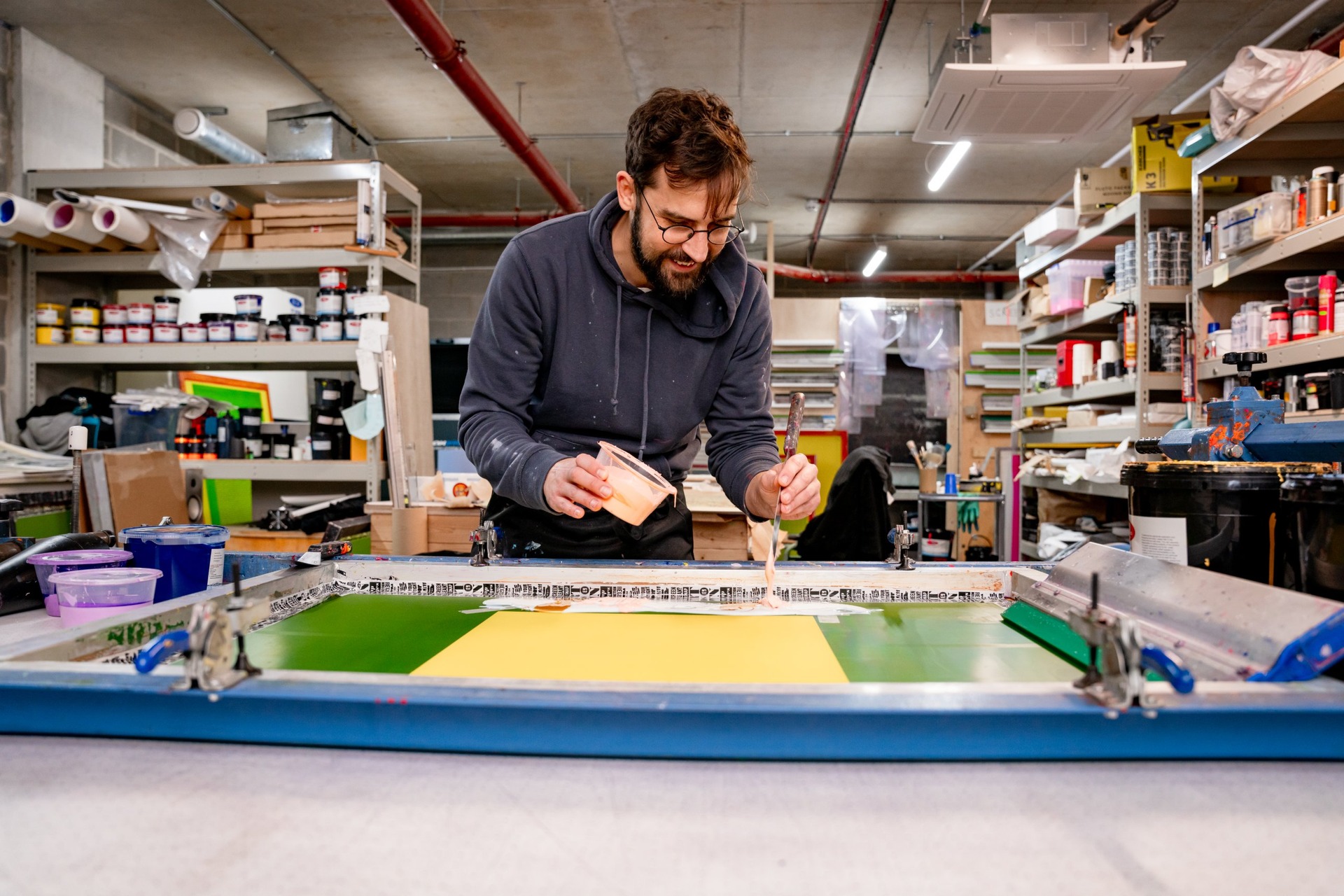
You have ideas to cut, stitch, mill, cast, and test. What you need is a private, lockable room that can handle tools, materials, noise, and a bit of mess without getting in the way of admin and client work. Done right, a maker studio becomes your production engine and your calm office in one.
This guide walks you through a practical layout for fashion, product design, and fabrication. You will find zoning tips, access planning, storage, safety, and noise control so you can move in fast and scale sensibly. One thing up front: Mainyard’s maker and creative studios are private and lockable. There are no shared workshop floors.
What a creative studio is (and how makers use it)
A creative studio is a private, enclosed workspace set up for professional creative work. At Mainyard, that can be a maker’s workshop for sewing, pattern cutting, prototyping, or light fabrication, or a space adapted for photography, video, or design. The key is control: a lockable door, your own layout, and room for tools and materials without constant teardown.
If your work is audio-first, you will benefit from a dedicated sound-treated room. Mainyard also provides purpose-built, soundproof rooms for that use. Explore options for music studios in London if your projects are recording-led.
Plan your layout around workflow
Start with the flow of a typical job from goods-in to goods-out. Then create clear zones so materials, tools, and people move in one direction without backtracking.
- Cutting and prep: Place pattern tables or sheet stock cutting next to storage. Ensure 1 m clearance around the main table for rolling bolts of fabric or handling ply and foam.
- Machines and assembly: Group machines by process to reduce changeovers. For fashion, that might be industrial sewing next to overlockers and a pressing area. For product and prototyping, cluster 3D printers, small CNC, bench drills, or solder stations with fire-safe surfaces and extraction where needed.
- Finishing and quality control: Keep a well-lit bench near the exit with simple jigs, gauges, or a dress form for checks.
- Clean desk space: Carve out a quiet admin corner with a computer, samples, and charging. A visual barrier, even a shelving run, helps keep dust off electronics and invoices in order.
Keep aisles wide enough for a trolley. If you routinely move 1.2 m sheets or garment rails, test the turning circle before locking in benches.
Safe machine placement and power
Place heavier kit on solid flooring, not near doors where traffic is highest. Avoid pinching points around bandsaws or heat-press stations. Map sockets and load; machines that spike on start-up often need separate circuits or at least staggered use. Cable-manage above benches with trunking and keep footpaths clear.
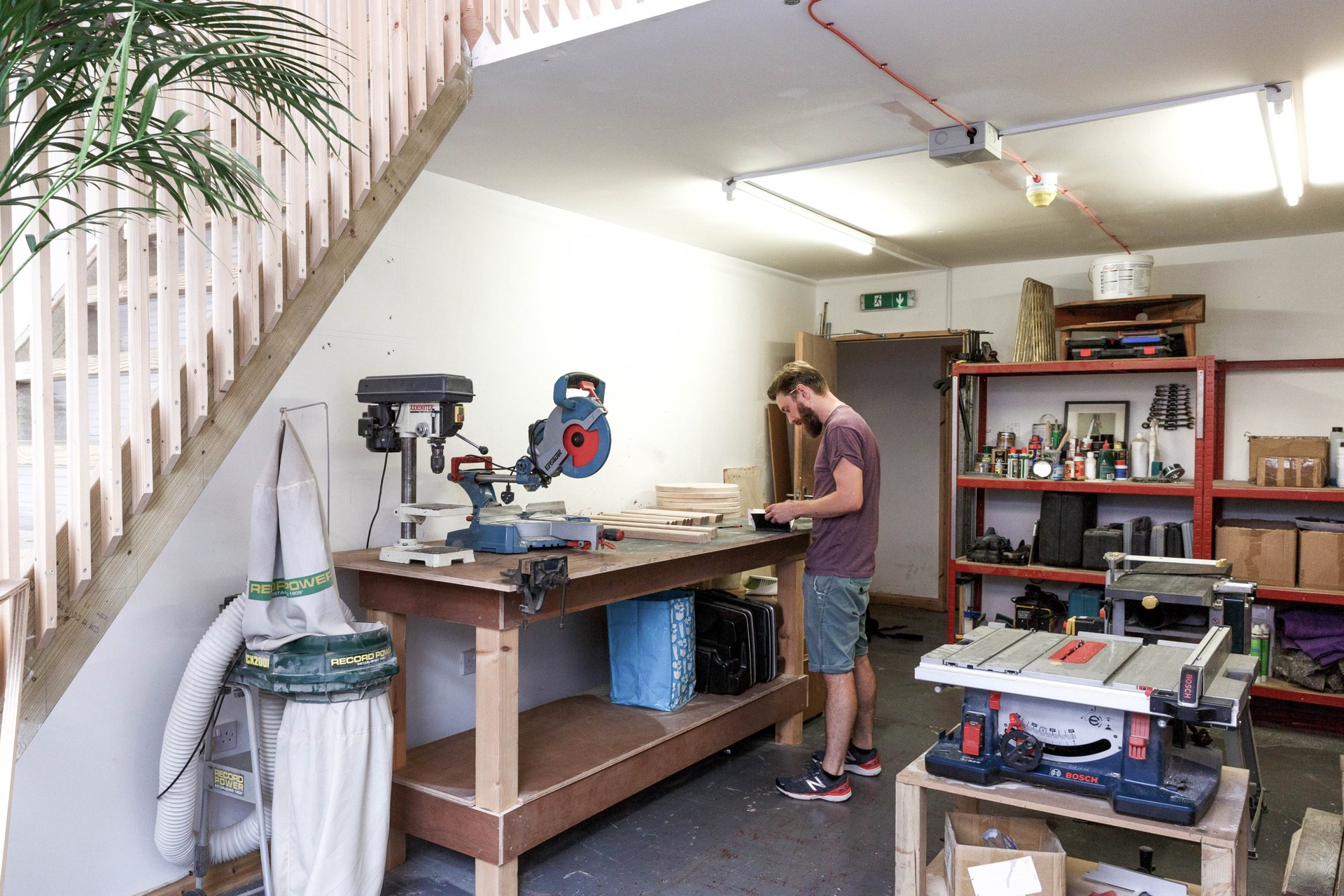
For fume or dust sources, use local extraction and seal gaps so noise and particles stay where they belong. Store flammables in a proper metal cabinet with clear labelling.
Storage that speeds you up
Great storage is silent productivity. Divide it into three layers.
- Working stock: At arm’s reach. Bobbins, thread, drill bits, adhesives, sample fasteners. Use shallow drawers with dividers and clear labels.
- Project materials: Shelving for fabric bolts, sheet goods, filament, and castings in progress. Label by job and date, first-in-first-out.
- Deep storage: Seasonal trims, infrequently used jigs, spare machine parts. Put this high or low, not in your main workflow.
Vertical wall space is your friend. Pegboards, magnetic strips for hand tools, and roll racks for fabric keep benches free.
Access and after-hours use
Private maker studios work best when access is simple.
- Trolleys and loading: Check lift dimensions, corridor width, and ramp availability. If you move in pallets, confirm loading windows and nearest drop-off.
- After-hours: Many Mainyard sites offer 24/7 secure access for full-time members, which helps when you run late tests or hit deadlines. Confirm what your specific site includes.
- Waste and recycling: Plan for offcuts, sharps, and finishes. Keep bins at the end of each zone, not in walkways.
If you split your week, consider using a coworking desk for admin-only days. Mainyard’s coworking offer gives you quiet desk time and meeting rooms when you do not need tools around you. On production days, your private studio keeps set-ups intact and momentum high.
Safety habits that stick
Write simple, visible rules for your future self and any collaborators.
- PPE to hand: Glasses, ear defenders, gloves, dust masks stored near the machines that need them.
- Power down checklist: End of day routine for sockets, compressors, heaters, and extraction.
- Clear paths: Aisles free, liquids stored low, spill kit visible.
- Tool induction: If anyone else uses your space, a 10-minute walk-through on key machines prevents costly mistakes.
Noise management in a private room
Private, lockable studios let you control noise. Start with practical steps:
- Place the noisiest kit on isolation mats. Rubber feet on tables reduce vibration.
- Line walls near loud machines with acoustic panels or curtains. Treat first reflection points rather than chasing perfection.
- Stagger loud processes, then schedule quiet admin blocks. A white-noise machine in the desk zone can help focus.
For full acoustic isolation, a purpose-built room is better than DIY. See Mainyard’s soundproof studios in London if audio quality is mission-critical.
When a coworking desk helps vs staying in your studio
- Choose a coworking desk when: you have proposal writing, CAD without prototypes, editing, client calls, or team catch-ups in meeting rooms. It resets your headspace and keeps admin away from dust and noise. Explore flexible coworking in London if you want day passes or part-time options.
- Stay in your private studio when: pattern iterations, fittings, machine runs, or prototyping is live. Every teardown risks errors; keep the tools set and the work-in-progress undisturbed.
Quick move-in and smart scaling checklist
Move-in fast:
- Measure corridors, lifts, doors; plan the route for your biggest item.
- Mark zones on the floor with painter’s tape before you build benches.
- Install task lighting first; then power strips, then storage.
- Set up your top three machines and your clean desk. Everything else can wait.
- Label everything on day one.
Scale sensibly:
- Add duplicate tools where bottlenecks form, not everywhere.
- Standardise consumables and fasteners to shrink stock.
- Review layout quarterly; move benches, not walls.
- Track utilisation vs monthly fees. Aim for steady throughput, not constant expansion.
FAQs
- What is a creative studio? A private, lockable workspace tailored to creative production or content work, set up for your tools, materials, and process. At Mainyard, studios are not shared floors; each room is your own.
- How much to rent a studio for one day? Pricing varies by size, location, and type of studio. Day-use options are more common for coworking desks and meeting rooms. For current availability and costs, contact Mainyard directly.
- How much does it cost to rent a music studio in London? Purpose-built, soundproof rooms command higher rates due to specialist construction. Prices vary by location and size. See Mainyard’s music studio pages for details and ask for current rates.
- How much is 4 hours of studio time? Short-session pricing depends on the site and room type. Get in touch for up-to-date options; some facilities focus on monthly memberships rather than hourly bookings.
Helpful Mainyard resources
- Explore private creative studios in London to see sizes and availability.
- Find purpose-built, sound-isolated rooms for recording and production.
- Check maker and workshop spaces in Hackney Wick.
Final takeaway
Design your maker studio around flow, safety, and focus. Keep noisy, messy processes separated from a clean desk so you can switch between production and business without friction. Use coworking for admin-only days when it helps, and lean on your private, lockable studio for everything that needs tools, materials, and continuity. If you are ready to find a private space that fits your process, explore Mainyard’s creative studios and maker rooms and book a viewing when you are set to move.